1. Regional Microclimate Dynamics & Severe Meteorological Stressors
Milwaukee coastal properties face severe meteorological wind exposure along Lake Michigan bluffs. Winter blizzards and late-spring thunderstorms produce sustained winds of 45 to 65+ mph, ripping aged architectural and three-tab shingles from roof decking. Additionally, heavy drifting snow loads exceeding 35 pounds per square foot stress structural roof rafters, while ice-laden tree branches frequently puncture roof sheathing.
Throughout Milwaukee, Wauwatosa, Brookfield, and Mequon, residential and commercial roof assemblies operate within an extreme coastal-continental freeze-thaw environment. During peak winter months, sub-zero Arctic air masses sweep across Lake Michigan, creating severe temperature differentials between interior conditioned spaces and exterior roof surfaces. In properties with inadequate attic insulation, broken vapor seals, or bypassed recessed light fixtures, heat rapidly escapes into the unconditioned attic cavity. This escaping warmth heats the plywood sheathing, melting the bottom layers of accumulated snowpack on upper roof slopes.
As the meltwater flows down the pitch toward the unheated roof overhangs and gutters, it hits an ambient sub-zero environment. The water refreezes instantly, building thick solid ice ridges that can exceed 12 to 18 inches in thickness. As melting continues, the ice dam prevents water from draining into gutters. Hydrostatic head pressure builds, forcing trapped water backward beneath the overlapping shingle courses. Standard shingles are designed strictly for gravity-driven runoff; once hydrostatic head pressure forces water upward under the shingles, nail perforations leak, ceiling insulation becomes waterlogged, and drywall ceilings in living areas suffer sudden collapse.
Key Technical Engineering Protocols • Milwaukee Field Standards
-
Zero-Impact Low-Pressure Boiler Steaming: Never permit blunt tools, hammers, or pressure washers. Dispatched technicians utilize industrial steam boilers delivering 290°F low-pressure vapor (under 100 PSI) to melt clean drainage trenches through dense ice dams without dislodging shingle granules.
-
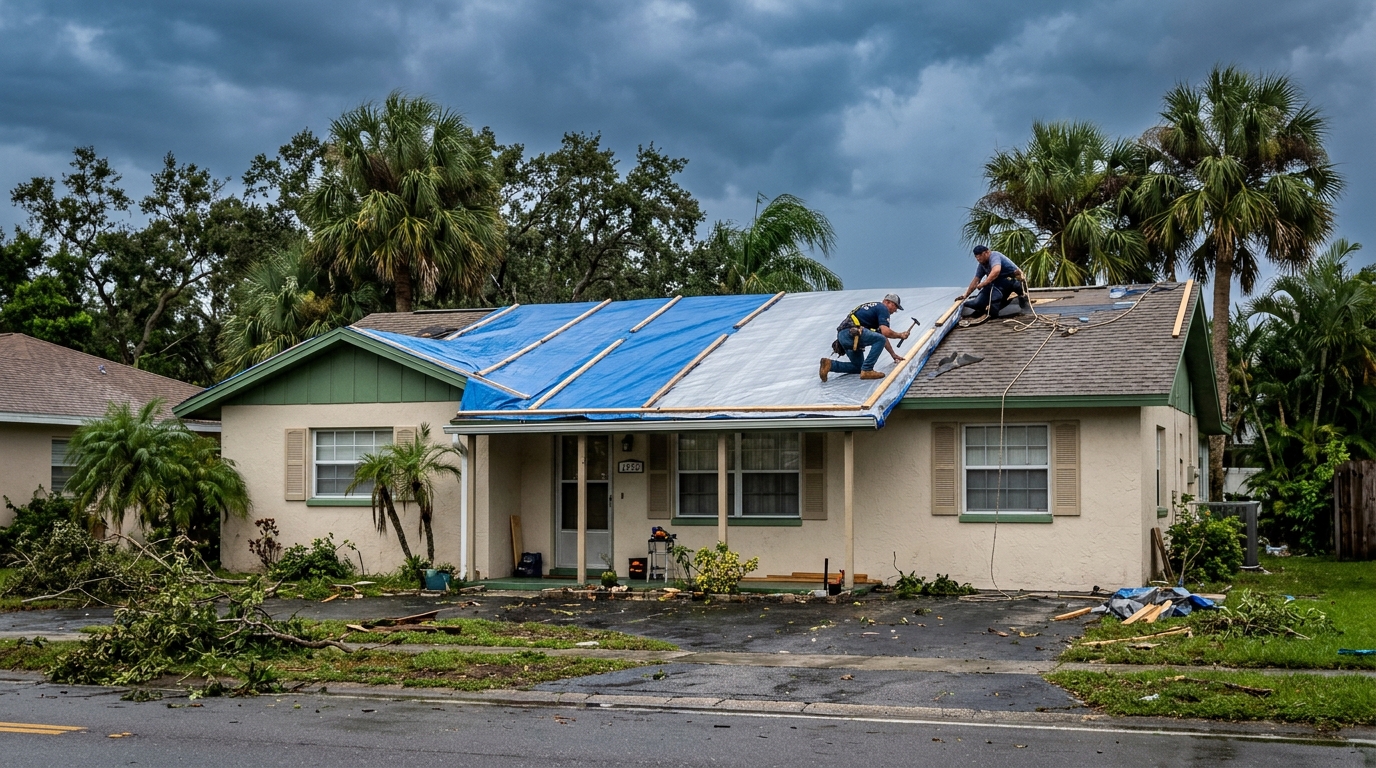
Timber-Batten Structural Anchoring: In active wind-shear or storm punctures, emergency tarps are secured using full-length 2x4 spruce-pine-fir lumber battens anchored directly into rafters with structural 3-inch exterior screws, eliminating wind flap fatigue.
-
Forensic FLIR Thermal Imaging: Calibrated infrared cameras identify water-saturated insulation batting inside rafter bays and wall cavities before hazardous black mold spores can take hold.
2. Structural Rafter Deflection Scanning & Sheathing Penetration Assessment
Accurately stopping an active roof leak requires tracing the complete subsurface water path rather than guessing from interior ceiling drips. Water entering through a cracked pipe boot collar, an eave ice dam, or a porous Cream City brick chimney flashing often travels 20 to 30 feet horizontally along sloped rafters, wiring conduits, or ceiling vapor barriers before dripping through light fixtures or drywall seams.
Dispatched Milwaukee roofing contractors deploy high-resolution calibrated FLIR thermal imaging cameras paired with electronic pinless impedance moisture sensors. Because wet building materials possess a much higher thermal mass than dry wood and fiberglass insulation, infrared thermography displays distinct thermal evaporative boundaries. Technicians quickly scan ceilings and wall cavities from inside the building, map moisture trails back to the exterior roof breach, and execute surgical leak repairs that preserve your home's structural framing without exploratory drywall destruction.
3. Timber-Batten Continuous Perimeter Anchor Protocol (No Sandbags or Loose Bricks)
Effective roof mitigation in southeastern Wisconsin requires specialized substrate engineering tailored to severe coastal climate dynamics. Once active water infiltration is contained, technicians carefully inspect the structural roof decking for water saturation, delamination, or fungal rot. Waterlogged OSB or plywood is cleanly excised and replaced with APA-rated exterior-grade sheathing fastened to rafters with hot-dipped galvanized 8d ring-shank nails.
To prevent future ice dam infiltration, contractors install self-adhering polymer-modified bitumen underlayment (ASTM D1970) extending a minimum of 24 inches inside the interior heated wall plane. Shingle courses are re-integrated using ASTM D3161 Class F wind-resistant architectural shingles, secured with an enhanced 6-nail fastening schedule. For flashing transitions around brick chimneys, skylights, and plumbing boots, crews install heavy-gauge corrosion-resistant metals sealed with elastomeric polyether sealants formulated to remain flexible at -30°F.
4. Wisconsin Uniform Dwelling Code SPS 321 Roof Framing & Temporary Enclosure Standards & Wisconsin Contractor Licensing
All residential and commercial roofing interventions must strictly comply with the Wisconsin Uniform Dwelling Code (UDC) SPS Chapters 320–325 and the Wisconsin Commercial Building Code SPS 361–366. In Wisconsin, residential roofing contractors must hold an active Dwelling Contractor certification and Dwelling Contractor Qualifier license issued by the Wisconsin Department of Safety and Professional Services (DSPS).
Roof Expert USA ensures that all dispatched roofing partners maintain verified Wisconsin DSPS contractor credentials, active ,000,000+ commercial general liability insurance, and statutory workers' compensation coverage. Furthermore, all repairs adhere to cold-climate ice barrier mandates (SPS 321.28), ensuring that every emergency repair and permanent restoration satisfies local building inspectors and provides bulletproof documentation for insurance claim adjusters.
5. Preventative Property Maintenance & Severe Storm Preparedness
Preventing devastating winter ice dams and storm damage requires proactive building envelope maintenance. Homeowners in Milwaukee, Waukesha, and Ozaukee counties should inspect their attics every autumn to verify that insulation is evenly distributed across ceiling joists and that soffit intake baffles remain clear of insulation blockages. Maintaining balanced 1:300 ridge-and-soffit ventilation ensures that cold exterior air continuously circulates beneath the roof deck, keeping sheathing temperatures below 32°F and preventing the snowmelt cycle that triggers ice dams.
Additionally, gutter systems should be thoroughly cleaned of autumn leaves and debris before the first freezing temperatures arrive. Clogged gutters trap melting snow and create the primary foundation for massive eave ice dams. In the event of an unexpected leak or winter storm failure, having immediate access to our 24/7 direct phone dispatch at (888) 208-4155 ensures rapid emergency mobilization to protect your home's structural integrity.
Service Specification: Verified Dispatch vs. Unlicensed Storm Chasers
Need Immediate Emergency Roofing Dispatch in Milwaukee?
Our dispatch desk is active 24/7. Speak directly with a live technical coordinator to mobilize licensed Milwaukee, Waukesha, or Ozaukee County roofing specialists. Strictly 0 web forms — immediate direct telephone triage:
CALL DISPATCH: (888) 208-4155